By Rusty,

One of the first things they drill into you in flight training sounds simple until you need it: trust your instruments.

I don't have my instrument rating, which is the license that lets a pilot fly in clouds and fog. But every instructor I had still hammered the same lesson. Your body will tell you things about what the airplane is doing. Sometimes it'll tell you you're in a dive. Sometimes it'll tell you you're way too slow. Your job isn't to go with those feelings. Your job is to look at the instruments and verify what's actually happening.

I found out why one evening on a flight to Fairhope, Alabama, just across the bay from Mobile.

It had been a long flight, and I was ready to see Mobile Bay. At night it's hard to miss. It's a big black void with city lights running down both sides. I figured I'd start seeing it 15 or 20 miles out, and that would be my cue to start down. I was still about 45 miles away.

Then, out of nowhere, I could see lights to my left and right and nothing but black straight ahead.

My first thought was that I was already looking at the bay. That meant I was way too high to land and my GPS must have frozen several miles back. While I was trying to make sense of that, my strobe lights suddenly got alarmingly bright. Then it all clicked. The black void in front of me wasn't Mobile Bay. It was a cloud, and I was in it.

If you've never experienced it, it's hard to describe how fast your senses turn on you. One second you can see for miles. The next, the only thing you can see is cloud rushing past a few feet from the windows. Everything in me said we were going really fast and in a steep descent.

Before overreacting, even though my stomach was in knots, I checked my instruments. Airspeed: 120 knots. Vertical speed: zero, no descent. Attitude indicator: level. Heading: 270, right on course.

My feelings were telling me one story. The facts were telling me another, and the facts said we were flying safely.

That's what makes a moment like that so dangerous. If I'd trusted what I felt, that we were nose down and going way too fast, the natural reaction would have been to pull back on the yoke to slow down. That's exactly how you stall an airplane. In a cloud, it's usually the overcorrection that gets pilots in trouble.

So I held it steady. A few minutes later (that felt a lot longer) I popped out the other side, and sure enough, there was Mobile Bay off in the distance, right where it was supposed to be. I made a nice, steady descent into Fairhope.

As far as I can tell, it was the only cloud in the sky that evening. And I found it.

I've thought about that flight a lot since, because I don't think pilots are the only ones who fly into clouds.

Our feelings are a gift. I believe God wired them into us for a reason. They let us know when something might be wrong, the same way a warning light does in a cockpit. But a warning light isn't the pilot. Feelings make a great alarm and a poor guide, especially in seasons when we can't see very far in front of us.

Maybe it's a hard week at work, and it feels like everything is falling apart. Maybe it's a tense stretch in your marriage, and it feels like the two of you are drifting. Maybe your kid is going through something and you feel like you're failing as a parent. Those feelings are real. They're just not always accurate.

So what do you actually check? The instruments I scanned that night translate better than I expected.

Airspeed. Am I really moving too fast, or does it just feel that way because everything is right on top of me? Sometimes the honest answer is that things are fine and I'm just tired.

Vertical speed. Is this actually trending down, or am I reacting to one bad day? One slow week isn't a slow year. One argument isn't a failing marriage. Look at the trend, not the moment.

Attitude. Am I level? It's amazing how much worse everything looks when I'm short on sleep, skipped a meal, or haven't spent any quiet time with God in a while.

Heading. Am I still pointed where I decided to go? If my values and commitments haven't changed, a cloud doesn't mean I need to turn around.

Maybe the most practical lesson from that night is this: don't make big moves inside the cloud. Pilots are taught to keep their inputs small and steady until they can see again. That's good advice for the rest of us too. The worst decisions I've seen people make, and I've made my share, are the ones made in a hurry while everything feels like it's spinning. The resignation email. The sharp text. The panicked financial move. The "we're done" conversation.

Hold it level. Fly the facts. Wait until you're out.

Clouds don't last forever. Most of the time, the thing you were waiting to see is still right where it was supposed to be. You just couldn't see it for a few minutes.

So let me leave you with a question:

What feeling are you treating like a fact right now?


Rusty is the founder of The Master's Lawn & Pest and writes Rusty's Corner to share real-life lessons from leadership, the wins, the struggles, and the growth in between. If we can help with your landscape or pest control, call or text our office at (352) 378-5296, or fill out our online form.
trust-the-night-instruments.png
By Rusty,

Every January, we talk about turning over a new leaf. New year, new you, new goals on the whiteboard.

But if you've got kids in school, or you just pay attention to the rhythm of the calendar, you know there's a second new year. It happens right about now.

Back to school. New teachers, new classrooms, new routines. And this year, if you're a Gator like me, a new head football coach too. I had to get that in there.

All that "new" can be a lot. But I've noticed something else happens every year around this same time — I look around at my own routines and realize summer has quietly wrecked a few of them.

I'll blame it on whatever's convenient. Maybe it's because it's still bright outside at 9 o'clock at night, so nobody's brain believes it's actually time to wind down. Maybe it's because my son didn't have school the next morning, so one late night turned into a habit. Honestly, it's probably not any one thing. It's a dozen small things, all summer long, each one seeming harmless on its own.

That's how it goes, though. Nobody decides in June to blow up their routine. It just slips, one late evening or one skipped morning at a time, until August rolls around and you don't recognize your own schedule anymore.

For me, it's usually my bedtime. I know — bedtimes are supposed to be for kids. But mine is one of my dominoes. Go to bed too late, and the next morning gets rushed. Rush the morning, and I spend the whole day chasing it instead of leading it.

Maybe for you it's not bedtime at all. Maybe it's your morning routine — the workout you stopped doing, the quiet time you used to protect before the house woke up. Maybe it's something that has nothing to do with mornings or nights at all. Meals. Time with your spouse. Time in the Word. Whatever it is, you probably already know what it is, because you felt it slip a little more each week this summer.

That's what I like about this second new year. Back-to-school gives you a natural, built-in reason to reset — without waiting five more months for January to roll around.

You don't have to overhaul your whole life. Just find the one or two things that slipped, and put them back where they belong.

What's your domino?


Rusty is the founder of The Master's Lawn & Pest and writes Rusty's Corner to share real-life lessons from leadership, the wins, the struggles, and the growth in between. If we can help with your landscape or pest control, call or text our office, or fill out our online form.

the-second-new-year-rustys-corner.jpg
By Rusty,
Recently, we spent some time during a team meeting discussing the idea of a paradigm shift from Stephen Covey’s book, The 7 Habits of Highly Effective People.

Paradigm shift is a big phrase for a fairly simple idea.

Sometimes the circumstances around us do not change at all, but the way we see them does.

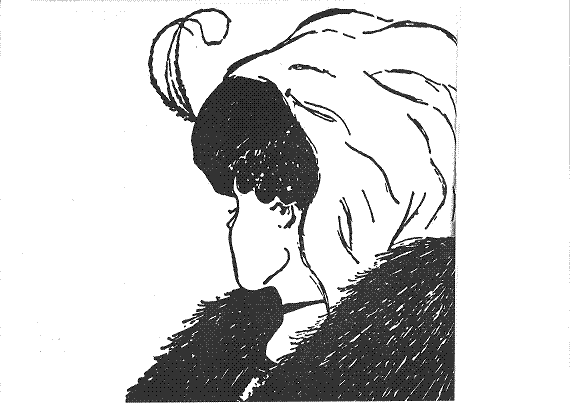
During the training, we looked at one of those optical illusion drawings that can appear to be either a young woman or an older woman. Some people immediately saw one. Others were convinced they saw the other. Both groups were looking at the exact same picture, but they were having two completely different experiences.

Optical illusion showing either a young woman or an older woman

Once someone pointed out the other image, though, it was almost impossible not to see it.

Nothing in the picture changed.

The lens did.

That exercise made me think about how often the same thing happens in my own life.

Two people can look at the same rainy day. One sees ruined plans. The other sees water our lawns, farms, and lakes desperately needed.

Two people can look at the same difficult employee. One sees a frustration. The other sees someone who may need clearer expectations, better training, or another chance.

Two parents can look at the same challenge with their child. One sees disobedience. The other may see fear, insecurity, or a child who does not yet have the words to explain what is happening.

The facts may be exactly the same, but the lens we choose affects everything that happens next.

I have certainly learned this the hard way.

There have been times when I was so convinced that my view of a situation was the right one that I never stopped to consider there might be another way to see it. I was not necessarily looking for the truth. I was looking for evidence that supported the conclusion I had already reached.

That is a dangerous lens.

The more I have thought about it, the more I have realized that perspective is not about pretending problems are not real. Staying positive does not mean ignoring disappointment, conflict, or hard facts.

It means choosing to look at the entire picture.

Sometimes a setback is also a lesson.

Sometimes criticism is also an opportunity to grow.

Sometimes an interruption is actually a person who needs our attention.

Sometimes the season we are trying to rush through is the season we will eventually miss.

A different lens does not always change what happened, but it can change what we do with it.

That may be one of the greatest gifts of a paradigm shift. It gives us the ability to pause before reacting and ask whether we are seeing the full picture.

Maybe the person in front of us is not lazy. Maybe they are overwhelmed.

Maybe the closed door is not only rejection. Maybe it is redirection.

Maybe the ordinary day we are rushing through is filled with blessings we have stopped noticing.

The lens we choose shapes the life we experience.

So let me leave you with a question:

What situation in your life might look different if you were willing to change the lens?

Create a great day,

Rusty


Rusty is the founder of The Master’s Lawn & Pest and writes Rusty’s Corner to share real-life lessons from leadership, the wins, the struggles, and the growth in between. If we can help with your landscape or pest control, call or text our office, or fill out our online form.

chatgpt-image-jul-30-2026-12_57_13-pm.png
By Rusty,

Rusty's Corner: Freedoms We Forget

This past week, during our team meeting, we spent some time talking about the freedoms we take for granted as Americans.

As you might imagine, there were plenty to list. The freedom to vote. The freedom to speak our minds. The freedom to worship. The freedom to choose our career. The freedom to pursue opportunities that simply don't exist in many parts of the world.

I find it so easy when discussing our nation to shift toward thinking about everything that's wrong.

It's easy to focus on what we wish was different. Easier still to take for granted the things we've become so accustomed to that we barely notice them anymore.

That training reminded me that gratitude often begins by noticing what has become ordinary.

Most mornings, I don't wake up thinking about how fortunate I am to live in a country where I can own a business, vote for my particular candidate, attend the church of my choosing, or raise my family according to our values.

Those things have become fairly normal.

But normal doesn't mean common.

Millions of people around the world would gladly trade places for the freedoms many of us experience every single day.

That doesn't mean America is perfect.

It's definitely not.

Every family has problems. Every business has problems. Every country has problems.

We can love something while still wanting it to improve.

In fact, I think that's exactly what good stewardship looks like.

One of the freedoms I'm most thankful for is the ability to build something.

Twenty-three years ago, The Master's Lawn & Pest was just an idea. Today, it provides opportunities for hundreds of families and serves thousands of homeowners and businesses across North Florida.

That's not something I take credit for, but it is something I don't want to take for granted.

As I reflected after that training, I realized freedom isn't just something we celebrate one day a year.

It's something we steward every day.

By serving our neighbors.

By raising our children well.

By treating people with respect, even when we disagree.

By working hard.

By giving back to our communities.

And by remembering that many of the opportunities we enjoy today were paid for by generations before us.

This Fourth of July, I hope we celebrate with family, good food, and maybe a few fireworks.

But I also hope we pause for just a moment to simply be thankful.

Because one of the easiest things to lose is appreciation for the blessings we've grown accustomed to.

So let me leave you with one question:

What freedom have you become so used to that you've forgotten to be thankful for it?

Create a great day,

—Rusty


Rusty is the founder of The Master's Lawn & Pest and writes Rusty's Corner to share real-life lessons from leadership, the wins, the struggles, and the growth in between. If we can help with your landscape or pest control, call or text our office at (352) 378-5296, or fill out our online form.

chatgpt-image-jul-2-2026-11_36_24-am.png
By Rusty,

Father's Day was a little different this year.

For me, Father's Day has always carried mixed emotions. My dad passed away when I was sixteen, so every Father's Day brings a moment where I wish I could pick up the phone, ask a question, share an update, or just spend a few hours together.

However, it's also a day I get spoiled a bit, too.

This year, though, Father's Day in our family carried a little extra weight because it was my wife Cassie's first Father's Day without her dad.

It got me thinking about something almost all of us experience eventually: the empty chair.

Maybe it's a father. Maybe it's a mother. Maybe it's a grandparent, spouse, sibling, or close friend. At some point, many of us look across the table and realize someone who used to sit there isn't anymore.

For a moment, that can feel incredibly sad.

But as I reflected more deeply, I realized the feeling that kept rising to the surface wasn't sadness alone.

It was gratitude.

I didn't have to get the father I got.

Cassie didn't have to get the father she got.

Neither of us earned that blessing.

In fact, something else struck me.

Both of us have older siblings who had the same father, but experienced a different version of him.

Not because he was a different man, but because he had grown.

Both of our dads became better fathers over time. Wiser. More patient. More grounded. Somehow, through no doing of our own, we were blessed to experience that later version of them.

What a gift.

The older I get, the more I realize how much of who I am today was shaped by a man who isn't here anymore.

The lessons.

The values.

The memories.

Even the shoes I'm still trying to fill.

Would I trade almost anything for another conversation with him?

Absolutely.

But I'm also incredibly thankful for the sixteen years I did have.

The same is true for Cassie.

This Father's Day wasn't simply a reminder of who wasn't at the table.

It was a reminder of how much those men gave while they were.

I think it's natural to focus on the empty chair.

But maybe it's healthier to focus on the life of the person who once filled it.

The conversations.

The laughter.

The sacrifices.

The example.

Because while the chair may be empty...

The impact isn't.

That's the amazing thing about a good father.

His influence doesn't end when he's gone.

It continues through the lives he shaped.

This Father's Day, I found myself feeling incredibly blessed.

Blessed for the fathers we had.

Blessed for the memories we still carry.

And blessed for the opportunity to pass many of those same lessons on to Griffin.

Maybe that's the real legacy of a father.

Not the things he leaves behind.

But the person he leaves within you.

So if there's an empty chair at your table, I'd encourage you to think about the person who used to sit there.

What part of them still lives on through you today?

Sometimes the greatest way we honor those we've lost isn't by dwelling on their absence.

It's by living out the legacy they left behind.


We often say that family comes first, but we also believe it's important to create opportunities to live that out. This summer, we invited the dads on our team and their kids to Dave & Buster's for lunch, games, and a chance to enjoy a few hours together. Watching fathers laugh, compete, and make memories with their kids reminded me that sometimes the greatest gifts aren't things—they're simply time together. I hope you enjoy this short recap of the day. 

Wondering what we did to celebrate mom's? because we absolutely could NOT leave mother's out:


Rusty is the founder of The Master's Lawn & Pest and writes Rusty's Corner to share real-life lessons from leadership, the wins, the struggles, and the growth in between. If we can help with your landscape or pest control, call or text our office at (352) 378-5296, or fill out our online form.

4a02d746-a6e1-4416-940f-d5213bd1419a.png
By Rusty,

Recently, I listened to Eric Church’s commencement speech at UNC (video is below)), and I have to admit, it was one of the better speeches I’ve heard in a long time.

Years ago, I was just a kid learning how to play guitar in my bedroom. I was never particularly good at it, but I learned enough to understand the basics. So when Eric Church built his entire speech around the six strings of a guitar representing six major areas of life, it immediately pulled me in.

His point was simple: when the strings are in tune together, they create something beautiful. But when even one string drifts out of tune, you hear it almost immediately.

And honestly, the older I get, the more I realize life works exactly the same way.

The first string he talked about was faith. He described it as the backbone string. The foundation. The thing that holds everything together when life stops making sense.

Because there are moments in life where logic runs out of answers. Moments where there isn’t a clean explanation for the “why.” Seasons where no amount of planning, intelligence, or preparation fully solves the hurt in front of you.

And in those moments, faith is often what carries people through.

The second string he talked about was family.

Not just the holiday-card version of family, though. The real version. The people who have seen you at your best and your worst and still choose to love you anyway.

Then he talked about your spouse or significant other being the third string of the guitar. The heartbeat of life.

And honestly, that one hit home too.

Because when your marriage is healthy, strong, and connected, so many other parts of life tend to sound better too. But when it’s neglected or out of tune, you will feel it everywhere else.

The fourth string, and probably the one I relate to professionally the most, was the balance of ambition and resilience.

The tension between wanting big things, while also having the ability to get back up when life punches you in the mouth.

We live in a culture that celebrates the highlight reel, but often forgets the resilience it takes to get there. Everybody loves the success story. Very few people talk about the setbacks, failures, rejection, and rebuilding that usually happen before success ever arrives.

The fifth string was community.

He made a comment about roots, and that analogy really connected with me.

Not because of plant roots, although I admittedly love those too, but because of hometowns, real connections, knowing your neighbors, coaching your kids’ team, serving your church, and building authentic relationships with people who truly know you. There's nothing like having deep roots to connect you to something real.

And lastly, he talked about the highest string. The melody string.

That's for You.

The line that stuck with me most was this:

“The world doesn’t need another cover song. It needs an original.”

I love that.

Because comparison has become the background noise of modern life. Social media constantly pushes us toward becoming versions of what everyone else expects us to be. But there has never been another you in the history of the world, and there never will be again.

Your story matters. Your gifts matter. Your calling matters.

And maybe the biggest takeaway for me was this:

All the strings drift. That’s part of life.

Faith drifts. Marriages drift. Priorities drift. Perspective drifts.

The goal isn’t perfection. It isn't attainable.

The goal is paying enough attention to notice when one area is slightly out of tune, instead of simply turning the volume up louder to cover it.

So let me ask you:

Which string in your life needs tuning right now?

Watch the speech below. You don't want to miss it. 


Rusty Thompson is the Founder and Visionary of The Master’s Lawn & Pest. He’s passionate about helping people grow, both in the landscape and in life.

may-rc.png
By Rusty,

A couple weeks ago, someone shared something simple that stuck with me.

He talked about how he keeps a playlist called “Perspective.” It’s a collection of songs he can turn on at any moment to reset his mindset. Songs that help him slow down, get out of his head, and reconnect with what really matters.

I thought that was a great idea.

So I decided to make one of my own.

My playlist looks a little different. It’s not just great music. 

It’s meaningful music. 

Songs tied to moments, people, and memories that have shaped me.

There’s the song Cassie and I danced to at our wedding.
There’s a song my dad used to sing in the truck with me.
There are worship songs that have grounded me in different seasons of life.
And even a few songs from movies that bring back specific memories.

What I didn’t expect was how quickly it worked.

The other day, I had a full schedule, a lot on my mind, and a decent drive. I turned that playlist on, and within a few songs, everything slowed down. Not my schedule - but my perspective.

It reminded me of what matters.

It reminded me of where I’ve been.
Who’s helped shape me.
What I’m grateful for.

And how small some of my current stress really is in the grand scheme of things.

It’s easy to live in our heads. To stay focused on what’s next, what’s wrong, or what’s not done yet.

But sometimes, we just need something that pulls us back for a minute.

For me, right now, it’s that playlist.

For you, it might be something different. A walk. A quiet drive. A moment without your phone.

Whatever it is, I think we all need something that helps us zoom out and remember what really matters.

So here’s a simple question I’ve been asking myself lately:

What helps you get perspective?

And maybe more importantly…

When was the last time you used it?


Rusty is the Founder of The Master’s Lawn & Pest. He’s passionate about our community, faith, family, leadership, and helping people grow - both in the landscape and in life.

ChatGPT Image Apr 24, 2026, 05_18_05 PM.png
By Rusty,

Whether Easter is a deeply spiritual holiday for you, or simply a time to gather with family and enjoy a meal together, I believe there’s something within the Easter story that applies to all of us. Even if you wouldn’t consider yourself a religious person, the themes of waiting, uncertainty, and hope in the middle of it all are things we all experience in life.

When most people think about Easter, they think about two moments. Friday, and Sunday.

Good Friday represents pain. Loss. Things not going the way we hoped.
Sunday represents victory. Celebration. Things working out in the end.

But there’s a day in between that we don’t talk about very often.

Saturday.

Saturday is quiet. It’s uncertain. It’s confusing. It’s the space where you don’t have answers yet.

And the more I’ve thought about it, the more I’ve realized… most of life is lived in Saturday.

It’s the season where you’re waiting on results.
Waiting on clarity.
Waiting on things to make sense.

It’s the space between making a decision and knowing if it was the right one.

Cassie and I are in one of those seasons right now.

We recently had to make a medical decision for our son. Not a simple one, and not one with immediate clarity. A decision was made, but it’s the kind of decision where we won’t truly know if it was right or wrong for years...and possibly ever.

Because as parents, we want certainty. We want to know we’re making the best possible choice. We want to protect, to guide, to get it right.

But sometimes, you don’t get that clarity right away. Sometimes, you make the best decision you can with the information you have… and then you wait.

That’s Saturday.

It’s not a crisis. It’s not a celebration. It’s the in-between.

And if I’m honest, that’s where I find myself wanting to rush ahead to Sunday. I want the answer. I want the reassurance. I want to know we got it right.

But life doesn’t work that way.

Saturday reminds me that just because I don’t have the answer yet doesn’t mean the story is over. It doesn’t mean nothing is happening. It just means I’m in the middle of it.

And if you think about it, we’ve all got something like that.

  • A decision you’ve made that you’re second-guessing.
  • A situation that hasn’t resolved yet.
  • A relationship that feels uncertain.
  • A season where you’re doing your best… but you don’t know how it’s going to turn out.

So let me ask you:

What “Saturday” are you in right now?

Where are you waiting for clarity, for answers, for things to come together?

Wherever that is for you, I think there’s something important to remember:

Saturday is not the end of the story.

It’s just the part where you keep going, even without the answers.


Rusty Thompson is the Founder of The Master’s Lawn & Pest. He’s passionate about our community, faith, family, leadership, and helping people grow—both in the landscape and in life.

January.png
By Rusty,

Most of life doesn’t get better because of one big moment. It gets better because of the second draft.

You know what I mean - the follow-up call you didn’t feel like making. The apology you should’ve said faster. The “Hey, can we try that conversation again?” moment. The decision to circle back and do it right, even when nobody’s watching.

I’ve noticed this in just about every part of my life.

In business, the first pass is rarely perfect. A process gets built, then we live in it long enough to see the weak spots. A team member gets trained, then we realize we didn’t explain the “why” clearly. A customer interaction goes sideways, and what matters most is what happens next. Do we get defensive, or do we own it and make it right?

At home, it’s even more true. Parenting isn’t a highlight reel - it’s a thousand little resets. Some of my best “dad moments” have been after I didn’t nail it the first time. When I circle back with Griffin and say, “Buddy, I should’ve handled that differently. Will you forgive me?” It’s humbling… but it also teaches him something more important than perfection: it teaches him what responsibility looks like.

Even on the farm (or honestly, anywhere you’re trying to build something), the second draft is where maturity shows up. The first pass is effort. The second pass is character.

Here’s the shift that’s helped me:
The second draft isn’t proof you failed. It’s proof you care.

Care enough to revisit the conversation. Care enough to improve the standard. Care enough to do the unglamorous follow-through. And that kind of care is rare these days. A lot of people want credit for intentions, but the real difference-makers are the ones who take responsibility for outcomes.

So here’s a simple reflection I’ve been asking myself lately, and maybe it’s worth asking too:

Where do I need a second draft right now?
A relationship that needs a follow-up?
A habit that needs a reset?
A conversation that needs to be re-done with more patience?

If something came to mind as you read that, don’t overthink it. Just take the next right step. In my experience, the second draft is where things start to heal, grow, and get strong.


Rusty is the founder of The Master’s Lawn & Pest and writes Rusty’s Corner to share real-life lessons from leadership—the wins, the struggles, and the growth in between. 

If we can help with your landscape or pest control, call/text our office or fill out our online contact form.

file_000000003da8722fa2414a767baaa00c.png
By Rusty,

This past week, we observed a national holiday in honor of someone whose life left a deep impact on our country. While discussing that, one of his famous quotes came up for discussion:

Life’s most persistent and urgent question is, ‘What are you doing for others?’

That one hits me. Because if I’m being honest, it’s easy to get wrapped up in me.
My schedule.
My to-do list.
My hobbies.
My timeline.

But that quote doesn’t ask what I’ve done for myself. It challenges me to look outward; toward the people I’ve been given to love, lead, and serve.

And it’s not just a nice idea. It’s a gut check.

What have I done for my bride lately?
What have I done for my son?
What have I done for my co-workers?
What have I done for the people in my community who won’t be able to return the favor?

I’m probably never going to change the trajectory of a nation.
But I can make a positive impact on my corner of it.

It reminds me of a story you may have heard before:

A big storm had passed through, washing thousands of starfish up onto the beach. After it passed, a man was walking along the shore, tossing one starfish back into the ocean at a time.
Someone stopped him and asked,
“Why are you wasting your time? You’ll never make a difference. There's so many of them.”

The man bent down, picked up another starfish, and tossed it into the water.
“It made a difference to that one,” he said.

That’s the kind of life I want to live.
One where the people around me feel seen. Helped. Valued.

I saw a sign recently that said:
“The world is better because you’re in it.”
And someone once told me that should be a question, not a statement.

So I’ll leave you with that same question today:

Is the world better because you’re in it?
If not, let’s do something about that - starting today.


Rusty is the founder of The Master’s Lawn & Pest and writes Rusty’s Corner as a space to reflect on the lessons he’s learning in life and business. If we can help you with your landscape or pest control, please call/text our office here, or fill our our online form here. 

RRustys Corner Starfish.png